
Chapter Twelve
Does Hollywood Success Always End In Suffering?
Have you ever experienced disastrous failure? I’m not talking about a minor screwup. I’m talking about major, life-changing destruction caused by your actions or the actions of others. I have experienced that and I’m going to tell you about it. But let’s start with this thought. How you deal with disastrous failure depends on your purpose for living. By that I mean, who are you working for and what are you trying to accomplish?
In 1989, The Equalizer ended with our fourth season. It was dropped by CBS in retaliation for Universal’s win over them in a negotiation regarding the series, Murder, She Wrote, that starred Angela Lansbury. CBS had lost a lot of money, and they took it out on us. This was very sad because we had been picked up for a fifth season. For me, it was a major transition. My agent told me that because I had been the showrunner of a hit series, I was now a star in the industry. Also, in a moment of friendly candor, he told me the philosophy of being a talent agent in Hollywood. He said, clients were like elevators. You got on when one was going up and got off when it started to go down. Well, my elevator was going up.
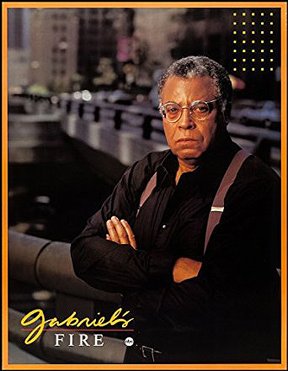
Free now from Universal, my agency added me as a series creator and executive producer to an amazing package, which included a TV pilot director, and James Earl Jones. It was a super high-profile project at Lorimar, a subsidiary of Warner Bros, and I was thrilled. I remember telling God, how thankful I was because everything I touched was turning to gold. For three and a half years writing for Edward Woodward, one of the greatest actors of his generation, and then picked to create a prime-time TV series for James Earl Jones. Obviously, God must love me more than anybody else. I should mention that this is not a good attitude to have. When you are enjoying success, it is easy to forget that you are a very small warrior in an earth-shattering war.
It all began extremely well. I wrote a pilot script about a Chicago police officer whom I named Gabriel Bird. (By the way, my wife, Carel, came up with that name.) In my story, Bird had been unjustly convicted of a crime and had spent 20 years of a life sentence in prison. A young attorney (brilliantly played by the actress Laila Robins) discovers his case and gets it thrown out. Suddenly, Bird is free. But he doesn’t want to be free because he has nothing on the outside. His family abandoned him long ago and he still has enemies who remember him.

The series was intended to be about the sharp edges of forgiveness, freedom, and how to save people who are in the process of destroying themselves. More than a little of The Equalizer was in it. Most of all, it was meant to tell stories about redemption, Gabriel Bird being the lead example.
At this point, I need to say that I’m going to relate some very sad and disturbing experiences with a brilliant and beloved star who passed away in 2024. I’m going to do it for two reasons. First, to point to a hellish fact about American culture. We are a pagan nation of idol worshippers. This includes millions in the so-called Christian church. We worship celebrities, whether Hollywood stars, sports figures, pastors, trillionaires or politicians. We long to be noticed by them. We listen to them. For those in political power, we believe the right ones will save us. The truth is that what we are really worshipping are carefully constructed lying images. And the reality is far different. With James Earl Jones, when he smiled the sun seemed to shine. I’m sure you remember him as a warm, caring grandfatherly figure.
The second reason I’m going to tell you of my experiences with this brilliant actor is to give you an idea of what the real spiritual war of popular culture is about. It is a war of stories and whoever controls our stories controls our minds and spiritual lives. Our idolatrous worship of celebrities is a disaster for America on every level because it is nothing but a choking mass of fabrication.
I placed the story of Gabriel’s Fire in Chicago and that is where we shot the pilot. Working in the city where I had spent so much time while growing up was a great experience. The mayor’s office gave us carte blanche for anything we needed, which included at one point an L train and a station. Carel came to visit and as a former Chicago native she particularly enjoyed using the mayor’s pass to park in no parking zones with police watching. One night, a small group of us, including James, attended a dramatic production at the Goodman theater. Of course, we got the best seats in the house. I can tell you that being in public with a major star is an odd experience. All eyes are on you. Obviously, you must be someone important to be with that individual. It’s easy to believe that yourself.
During the shoot all went extremely well, but there was a strange moment. At the end of one day’s work a limousine was waiting to take James back to our hotel. All of us were staying in the same place. Carel would ride back with him. As they came out of the building where we had been shooting, a small group of fans was waiting. A little boy had a Star Wars picture book in his hand with a page open to a photo of Darth Vader. He wanted an autograph. James walked up to the boy and took the book and pen. But instead of autographing the picture, he did a huge scribble across the entire page destroying it, then he handed it back to him and walked away, all without a word. Everyone was shocked and speechless. Carel and James got in the limousine and left.
In four weeks, our pilot shoot was completed and the performances were impressive. Very quickly, the series was picked up for the fall schedule by ABC. We began writing episodes. But almost immediately, something happened. At some point, James discovered that I was a Christian. I know it sounds very strange, but from that moment, he hated everything I wrote. I began having terrible problems with him. I was doing exactly the same kind of storytelling that I had done on The Equalizer that had helped make that series a success. James didn’t want to perform some of the scenes that I wrote. It got so difficult that finally it was suggested that I talk to the last showrunner who had worked with him on a series. That was Steven Bochco, the most successful series creator of that period, responsible for a string of hits such as L.A. Law, Hillstreet Blues, Doogie Howser and more. Ten years previously he had worked with James on a series.

I called Steven and we talked. Of course, he didn’t know that I was a Christian. He told me that his experience with James had been terrible. Why was this so? He believed James was filled with hate and anger and it was because of his background. Steven told me that James had been abandoned by his parents and raised by his grandparents who had done two things, they had beaten him and taken him to church. This had created a serious stuttering problem that he had overcome. In Bochco’s opinion, his background caused him to hate any male authority figure. He said the situation had gotten so bad that he took James to meet with the executive in charge of their series, a man named Grant Tinker. Tinker had backed up Steven and told James to cooperate. But the series ultimately failed. When I heard all of this, I knew I was doomed. I had no Grant Tinker in my corner. The executive I answered to was a man named Leslie Moonves. Before five episodes had been completed, I was fired.
I remember vividly the day I left the show. I sent a message to everyone on the team wishing them the best as they went forward. I confronted a stark reality. To be fired from such a high-profile project was a lethal blow to my career. But as I drove home that day, I felt no anger, bitterness, or self-pity. And I wasn’t fearful. What I felt was humiliation along with deep sorrow for James and everyone involved in the series. But I knew that nothing had happened by accident. I didn’t know the purpose. I still don’t. But I knew that what had happened to me was in God’s Hands and part of His plan.
Deep rejection and the humiliation that comes with it is a form of suffering. Jesus said that His servants would experience rejection and humiliation just as He did. The call of a servant warrior for the King is to bear reproach, forgiving those who have done it and praying for them. That was the challenge in front of me.
Very soon, Gabriel’s Fire began to fail. After it had been on the air for only a short time, a headline appeared in Variety that read, “Gabriel Has Lost His Fire.” The storytelling of the entire series had been subverted. Nevertheless, the following fall after the series had been taken off the air, James won a well deserved Emmy. I think particularly the award was based on his performance in the pilot. I didn’t see his acceptance speech on TV. I was working at a different production company. The morning after, I received a call from the senior vice president who had supervised the writing of my pilot at Lorimar. Apparently, in his acceptance speech, James had thanked everyone but me. This executive had called to say he thought the omission was awful and wanted me to know that they had appreciated my work. I was thankful for his call.
At this point, you might ask, “Coleman, are you certain that your view of all that happened is really accurate? Did James Earl Jones really hate all of your writing simply because you are a Christian? How could that be true?” Six or seven years after Gabriel’s Fire was off the air, a friend of mine was consulting on a film where James was one of the stars. On the set she went up to him and told him how much she had loved his work on the Gabriel’s Fire pilot, referring to a specific scene that he had performed so well. A strange look came on his face and he said, “The man who created that had a spiritual agenda and we can’t have that on television.” My friend smiled and responded, “Doesn’t everybody have a spiritual agenda?” Then she walked away.
On The Equalizer at Universal, I was surrounded by the most supportive team. After I had left Gabriel’s Fire I came to realize that at Lorimar I had been surrounded by wolves. Though it was many years ago, the sadness of it does not end. Over all these years, I have prayed for those people. However, I want you to know that through that entire heartbreaking experience, I had the peace of Jesus Christ that passes understanding. While what happened was a tremendous blow to my career, I knew that it wasn’t my career at all. Everything belonged to Jesus. I was in Hollywood to tell His stories and go through whatever those stories might bring.
James passed away in 2024 and I had prayed for him over all the years. He recorded an audio version of the New Testament that has sold hundreds of thousands of copies. I’m sure his performance was excellent, and he made a well-deserved profit from it. Yet, very sadly, I have found no concrete evidence or verifiable statements of his that would indicate his life had changed in any way from the time I worked with him. If you would like to see the wonderful work he did on the Gabriel’s Fire pilot you can watch it here or here.
Fake American Christianity worships success. It spiritualizes numbers, money, emotion and human power of every kind. Which is exactly the opposite of what Jesus said would be true for His real followers, those I have called His servant warriors. What would be true for them? Suffering, difficulty, persecution, rejection, and very often what appears to be failure in the eyes of the world. Through it all, they are not serving themselves or their personal interests. They have given everything to the King.
Let’s stop worshipping fantasies and view reality. Every human being suffers in countless ways. What matters is why you are suffering. Is it because of your own stupidity and sin? That’s certainly been the cause of so much of mine. And I love to spiritualize that kind of suffering, so I don’t have to take responsibility for it. But suffering because you are following Jesus in the way of the Cross is entirely different. And you will know that difference.
In the process there is something else you will learn. You will learn one of the most important lessons of a servant warrior. You will learn to stop asking why. Why did this happen? Why am I going through this? When you don’t get the answers that you have demanded you are on the road to bitterness, self-pity and anger. There are so many things that have happened in my life that I just don’t understand. When I don’t demand to know why and leave all of them in the Hands of Jesus I begin to know what faith was really about. The pain is still there, the sorrow and the suffering continue and I pray so hard for relief, but through it all I am learning what it means to have His Presence beside me carrying my pain because He loves me. That learning will go on as long as I am in this world. But after many, many years I know that what Jesus said is true. He never leaves us or forsakes us.
There are two things that we should realize now about the mysteries of sorrow and suffering. First, they will not be mysteries forever. When we leave this world and enter Jesus’ Kingdom of Heaven we will understand many things that are hidden from us in this life. The Apostle Paul wrote these words in I Corinthians 13:11-12. “When I was a child, I spoke like a child, I thought like a child, I reasoned like a child. When I became a man, I gave up childish ways. For now we see in a mirror dimly, but then face to face. Now I know in part; then I shall know fully, even as I have been fully known.” Do you understand what that means? All questions answered, God’s purposes in your life revealed and His love vindicated.
Second, at the end of our suffering as servant warriors for the King something is promised for us. The Apostle Paul, who suffered tremendously for Jesus, ultimately dying for Him, wrote about what is ahead for you and me in II Corinthians 4:16-18 “Therefore we do not lose heart, but though our outer man is decaying, yet our inner man is being renewed day by day. For momentary, light affliction is producing for us an eternal weight of glory far beyond all comparison, while we look not at the things which are seen, but at the things which are not seen; for the things which are seen are temporal, but the things which are not seen are eternal.”
A weight of glory that lasts forever for faithful servant warriors. I want that for you and me. So right now, if you are suffering, place all of it in the Hands of Jesus. As you suffer, stop asking why and ask for His peace. As Oswald Chambers wrote in his wonderful book, My Utmost for His Highest, through suffering we are being made into broken bread and poured out wine to meet the needs of others. There is no wine unless grapes are crushed and bread cannot feed anyone unless it is cut and broken. This is the call of a servant warrior. Whatever you are facing, trust in Him and don’t give up.

Bible Study and Small Group Discussion Questions
- What does Scripture teach about suffering that comes through unjust treatment?
- Passage: I Peter 2:19–21, “For this is a gracious thing… when you do good and suffer for it you endure… Christ also suffered for you, leaving you an example.”
- From the chapter: “To be fired from such a high-profile project was a lethal blow to my career… But I knew that what had happened to me was in God’s Hands and part of His plan.”
- Question: How does trusting God’s sovereignty reshape the way you respond when you suffer for doing what is right?
- Why is celebrity worship spiritually dangerous?
- Passage: Psalm 115:4–8, “Those who make idols become like them; so do all who trust in them.”
- From the chapter: “We are a pagan nation of idol worshippers… We worship celebrities… what we are really worshipping are carefully constructed lying images.”
- Question: Where are you tempted to elevate human figures—artists, leaders, influencers—into a place only God should hold?
- How should believers respond when rejection wounds their identity?
- Passage: Isaiah 53:3, “He was despised and rejected by men… a man of sorrows and acquainted with grief.”
- From the chapter: “Deep rejection and the humiliation that comes with it is a form of suffering… The call of a servant warrior… is to bear reproach, forgiving those who have done it and praying for them.”
- Question: What does it look like to follow Jesus’ example of forgiveness when you are rejected or humiliated?
- Why must servant warriors stop demanding to know “why”?
- Passage: Proverbs 3:5–6, “Trust in the Lord with all your heart… and He will make straight your paths.”
- From the chapter: “When you don’t get the answers that you have demanded you are on the road to bitterness… When I don’t demand to know why and leave all of them in the Hands of Jesus I begin to know what faith was really about.”
- Question: What unanswered “why” in your life do you need to release into God’s hands?
- How does Scripture reframe the purpose of suffering?
- Passage: Romans 5:3–4, “We rejoice in our sufferings, knowing that suffering produces endurance, and endurance produces character…”
- From the chapter: “Through suffering we are being made into broken bread and poured out wine to meet the needs of others… There is no wine unless grapes are crushed.”
- Question: How might God be using your present suffering to shape you into someone who can serve others more deeply?
- What does it mean to live for what is unseen rather than what is seen?
- Passage: II Corinthians 4:16–18, “For the things which are seen are temporal, but the things which are not seen are eternal.”
- From the chapter: “Fake American Christianity worships success… exactly the opposite of what Jesus said would be true… Suffering, difficulty, persecution, rejection… while we look not at the things which are seen.”
- Question: Where do you still measure your life by visible success rather than eternal faithfulness?
- How should believers view the mystery of suffering in this life?
- Passage: I Corinthians 13:12, “For now we see in a mirror dimly, but then face to face… then I shall know fully.”
- From the chapter: “There are so many things that have happened in my life that I just don’t understand… When we leave this world… we will understand many things that are hidden from us.”
- Question: How does the promise of future understanding help you endure what you cannot explain today?
- What does it mean to remain faithful when the world calls your obedience a failure?
- Passage: Matthew 16:24, “If anyone would come after Me, let him deny himself and take up his cross and follow Me.”
- From the chapter: “What matters is why you are suffering… Suffering because you are following Jesus in the way of the Cross is entirely different… Whatever you are facing, trust in Him and don’t give up.”
- Question: Where is Jesus calling you to persevere in obedience even when it looks like failure to others?

