Adaptive Marketing And Distribution (AMAD)
When I was in high school I somehow convinced this kind, brilliant and beautiful girl to be my girlfriend. I still don’t know how this happened. She was a PK, or Pastor’s Kid so I started splitting my time between the church my family went to and her family’s church. One Sunday as we were driving to the service, she let me know what was going to happen that day. After the service there would be a potluck lunch, then a short class and everyone would be sent off in different directions from the church to knock on doors. We were to share Jesus and tell the neighbors about the little local church. My girlfriend was worried about how I would react to this and truthfully, I was terrified. I had never done anything like this. But I was 16 and wanted to impress her so I didn’t dare show any fear. It didn’t help that their church was in a slightly rough area of LA and as a tall, gangly white kid, I knew I would stand out walking that neighborhood.
The experience was remarkable. Yes, many doors were slammed in our faces but many were not. And I learned that this was one of the main drivers of growth for their little church. There was no social media or even websites, marketing and advertising were expensive and usually not effective. What was effective? A group of people, heading out by twos and threes, shooting off in all directions from the church and meeting people. Telling their neighbors about the Love of Jesus and this little community that wanted to welcome them.
What does any of that have to do with marketing and distribution of film? These days if you are an Indie Filmmaker or making non-horror low to high-mid range budgeted movies, doors are being slammed in your face.
The well-known secret of marketing is that advertising builds awareness but the most effective way to convert that into actual sales, of any kind, is word of mouth. This is true for me and I suspect it is true for you. I spend time reading the reviews of any product I am shopping for, I want to see what people who actually bought and used it, feel about it. I check Rotten Tomatoes before I go to a film, glancing only at the Critics reviews before checking what the Audience thought. While not being the only factor, this affects my choices to a great degree. The biggest thing besides my own interest in the genre or type of film, the biggest thing that will make me watch something I might not have heard of, or might not have any interest in, is if a friend says “You have to see this.”
There is a ton of talk about how to promote your film, how marketing has to be part of the development process from the start of the script, how to distribute, what deals to make or avoid, (and some of this is important and true) but it skips the main part of the problem.
There are no undiscovered masterpieces in film. I mean, maybe there are a couple right now, but they will be discovered eventually. While it’s true that some films will take longer to find their audience than others and there have been marketing misfires that led to disappointing box office returns, such as The Princess Bride, the simple fact is, eventually films will find the audience they deserve. Despite its modest box office, The Princess Bride is a much beloved, constantly rewatched classic today.
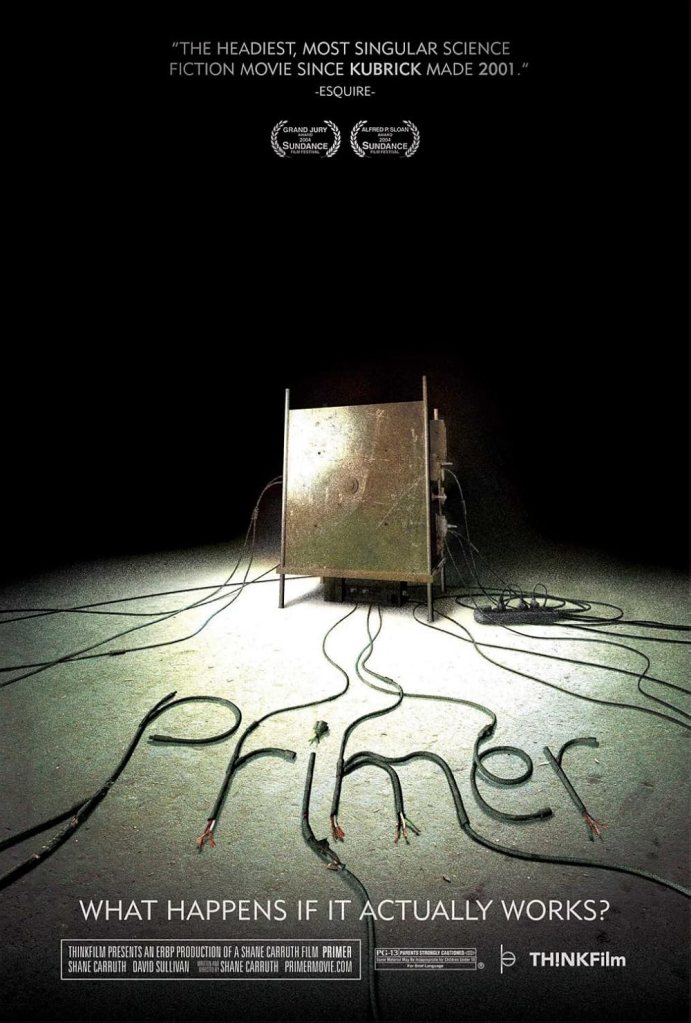
Small, low-budget films are no different in this than major studio pictures. It may just take longer for word of mouth to spread and the ceiling will be lower. But word of mouth is why I watched Primer, Coherence, The Man From Earth, The Vast of Night and many more.
What no one wants to say, but is true, is that the real reason most films fail is they aren’t any good. Yes of course, there are niche films that are great and appeal to a particular audience, they find their ceiling. And yes, of course, the market is flooded with films now. Streaming and online distribution combined with a much lower threshold of entry for making a film, all contribute to the difficulty of surfacing an excellent film in today’s media ecosystem. But still, most films are not well done and don’t appeal to many or anyone.
With Indie Filmmakers, pinpointing the problem is fairly easy. It really comes down to two things. The first is that the indie filmmaker is learning the craft. The second is, indie filmmakers tend to combine that inexperience with pretentiousness and a self-centered focus (write what you know and apparently most indie filmmakers are chronically depressed). So a lot of times when a great indie film is made, it is depressing. I call this Misery Cinema where trauma is mistaken for drama and suffering is inflicted on the audience.
With Studio pictures, the problem is more difficult. There have always been pros and cons working within the studio system and until recently, the pros far outweighed the cons. I would nutshell the core problem this way: the studio heads are businesspeople these days, not storytellers. They are interested in shareholder value which drives short-term thinking. And stories are being chosen and developed by algorithmic demands instead of instinct. They are being marketed and distributed for quarterly earnings reports instead of being built and viewed as long term assets.
But this data-driven, shareholder beholden, streaming enslaved new Studio system has destroyed the market. Mid-budget films, especially character dramas, get no love today and the justification for this is that the algorithm says there is no interest. Box office is low, per screen averages are awful. But this is just a misuse of the data.
What if I told you the market for all these films is still there? Not only still there, but can still be tapped for far greater Return On Investment on all levels, types and quality of films? To find out how, we don’t need to reinvent anything, we just need to look at Old Hollywood and use new data driven tools. This article lays out Adaptive Marketing and Distribution (AMAD): a platformed, data-driven theatrical strategy that treats streaming and physical media as ancillary markets, maximizes word-of-mouth, and restores sane ROI to films of all sizes (except mega-budget wanna-be blockbusters). But we need to toss out some conventional wisdom.
Forget about “owning the audience.”
This is straight-up garbage advice. First it is all but impossible for the Indie Filmmaker. Second, no one owns their audience. They rent them, project by project. People talk about Spielberg owning his audience but no one cared about watching a film about his childhood. The Fablemans bombed. I mean, he has earned the right to make an introspective autobiography if he wants to and it is a good film. But people didn’t line up to see it because it was a Spielberg movie.
Recent history has shown us that even massive franchises like Star Wars, Star Trek and Marvel, who, it certainly could be argued “owned their audience,” don’t own anything. There is a lot of argument and discussion about why they have fallen so far and I have no interest in doing an autopsy here, other than to say that they forgot why earlier iterations worked and it has nothing to do with woke or not, it has to do with characters. But what is relevant to this discussion is they assumed they “owned the audience.” This delusional misconception allowed them to disrespect the audience and a disrespected audience just stops watching. Or worse for a franchise, they stop caring so by the time a course correction is made, it’s too late.
I mean when you talk about “owning the audience” you are really talking about owning people. The concept itself is disrespectful. It is fundamentally immoral thinking and immoral thinking leads to tactical errors. Or to put it another way, the concept is wrong because it’s empirically false and acting on a false premise leads to bad decisions. Star Wars, Star Trek and Marvel are all suffering from this, the idea they can do whatever they want because they “own the audience.”
So if major studios can’t do it, if Spielberg can’t do it, if Marvel, Star Trek and Star Wars can’t do it, the indie filmmaker can’t do it. Stop trying. Throw it out, forget the concept. Let me say it one more time. It is complete garbage and nonsense.
Also forget worrying about your Social media following. It is all but irrelevant. It barely converts to ticket sales. Hollywood is all afire with getting influencers in films because they think it translates into sales. It doesn’t and the reason it doesn’t work is that the films are mostly no good. And if the films are good they don’t need influencers. People following influencers are doing it for specific reasons and those aren’t to watch them playing a character in a movie. Yeah, I’m oversimplifying, but not by much.
Stop blaming the streaming environment and the lack of marketing budget as reasons why your film didn’t make money. And I will repeat a bit of now conventional wisdom here that I think is true.
Forget about film festivals. They’re done. Over. Irrelevant. Ok, Ok. Film festivals aren’t “dead,” but they have stopped serving the independent filmmaker in any meaningful way. The modern festival ecosystem is dominated by studio‑adjacent prestige projects (fake indie films), streamer-backed acquisitions, and pre-packaged films with representation and marketing already in place. Sundance now receives tens of thousands of submissions, and programmers rely on algorithmic pre-screening just to manage volume. That means a truly independent film, without a sales agent, a name actor, or a pre-arranged distribution conversation, rarely gets seen, let alone launched.
Festivals have shifted from discovery engines to content marketplaces, where streamers arrive with deals already structured and only a handful of films receive real attention. For most filmmakers, the result is the same: years of waiting, thousands spent on submission fees, and no meaningful path to distribution. Festivals aren’t malicious, they’re simply no longer built for the kind of independent filmmaking that once relied on them. And that’s why they cannot be the foundation of any modern distribution strategy.
And they mostly result in terrible deals for the filmmaker. Plus those distribution deals, especially that come out of the smaller ones, take it all out of your hands and put the control into the hands of poorly managed dinosaur companies that often make their money on volume rather than quality.
Which leads me to what actually can be done with your film. Adaptive Marketing And Distribution (AMAD). The first principle is one I am going to restate:
Marketing Builds Awareness – Word of Mouth sells tickets.
Sure a studio can spend tens or hundreds of millions of dollars on marketing and get a huge opening weekend but the second weekend drop off of so many films these days proves this principle. If people aren’t walking out of the theater and going home to tell a friend or post on social media about how much they loved your movie, the marketing doesn’t matter. If they walk out hating it and telling people so, the marketing spend was a waste. When I worked in restaurants, one corporate chain told us that when people have a good experience, they tell one or two people. When they have a bad experience, they tell six to eight people.
AMAD won’t make a bad film into a hit. But what it can do is two things. Maximize ROI and mitigate loss. This is something Old Hollywood did all the time and it starts with an out-of-style strategy that still works.
Platforming.
Let’s go back in time to the pre-Studio era. The Film exchanges. Zukor’s Famous Players, the Laemmle exchanges, the regional outfits that eventually consolidated into the studio system. A regional exchange might have two or three prints of a title cycling through dozens of theaters sequentially. A film would arrive in a town, play its run, physically ship to the next town. The audience in town two had already heard about it from town one. The distribution schedule was essentially a word-of-mouth map drawn in advance.
Fast forward to the late 1950s through the late 1960s. The studio system was firmly in place but the P part of P&A represented real capital. A typical wide release might strike two or three hundred prints at significant cost per print, and those prints traveled a circuit. They started in New York, L.A. and Chicago and months later arrived in the smaller cities. They were physically precious objects that enforced a discipline on distribution that we have entirely lost.
But here is what that constraint produced. A film arriving in your city was an event. It had traveled to get there. People in the next town had already seen it and word had traveled ahead of the print. The poster went up weeks before opening. Yes, there was radio, and then TV but word of mouth was the main engine. That was your marketing department.
Films arrived heralded by local press and the built anticipation of something that had already proven itself elsewhere. Scarcity was the marketing. The limited print count wasn’t a limitation to overcome, it was the engine of the event.
The history basically runs: exchanges taught the industry how distribution works, studios absorbed that knowledge and built empires on it, the Decrees broke the vertical integration, digital eliminated the physical constraint that enforced discipline and now nobody remembers why any of it worked in the first place.
Let’s jump to 1981 for a moment and talk about a small character piece, a story of two long distance runners in an almost forgotten Olympics in the early 20th Century. Doesn’t sound particularly compelling when I phrase it like that… I mean, two British athletes in the 1924 Olympics, one a devout Scottish Christian who runs for the glory of God and the other an English Jew who runs to overcome prejudice. Period piece, niche sport, no stars. Every algorithm would have killed it. Word of mouth made it. I’m talking, of course, about the Best Picture winner and hit movie, Chariots of Fire.
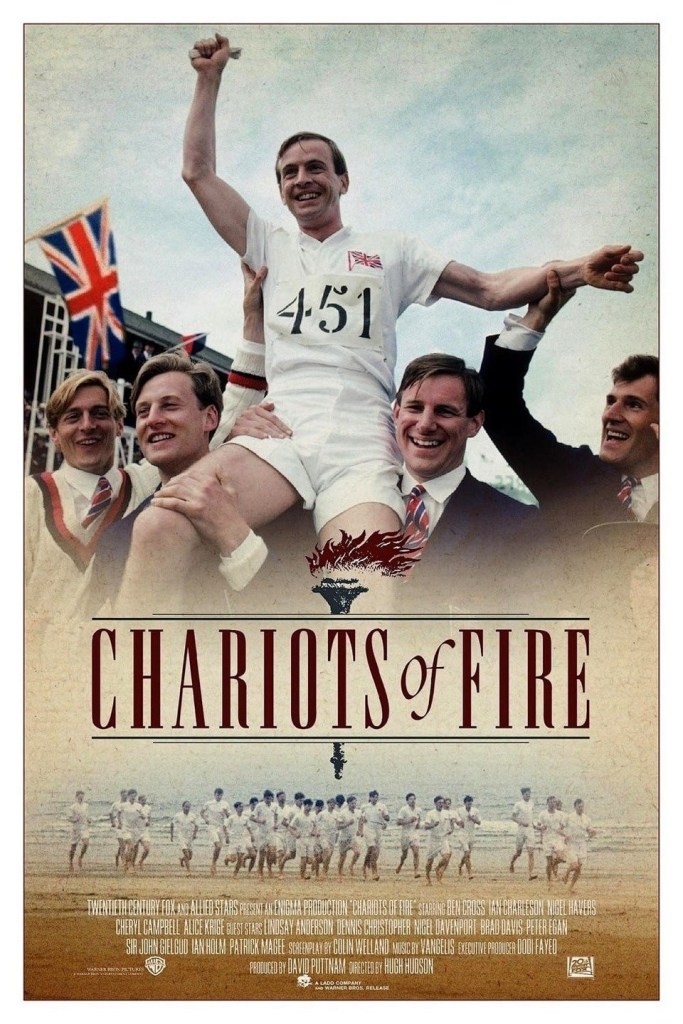
Budgeted at 5.5 mil, the film was released September 25, 1981 in Los Angeles and September 26 in New York at the New York Film Festival, October 23 in Washington DC…. and opening “weekend” was $69,000 ($253,000 in 2026 dollars), three cities, LA, New York and DC. With three or four screens. But the per screen average is monstrous for an art film. Between 17 and 22,000 dollars per screen. Remember this because it is a principle I am going to come back to. Per screen average matters more than anything else. Why? Because it controls perception.
Chariots of Fire didn’t go wide in the United States until April 9, 1982. That’s six and a half months of platforming before wide release. Then it grossed almost 60 million in the US and Canada.
And the old ancillary market of broadcast TV, along with the new ones at the time, home video rentals and HBO were just gravy at that point (exact numbers were not available). Notice I called home video and HBO ‘ancillary.’ Because that’s what they were and that’s what streaming still is today. The modern industry tried to turn the ancillary market into the main market and it broke the math of film economics. Streaming is an ancillary market for Feature Films and it always will be. More on that later.
But I can hear you thinking, this was forty-five years ago. Surely this would never work today. So let’s glance back to a few years ago at Everything, Everywhere, All At Once. EEAAO opened on ten screens March 25, 2022, with a $500,000 opening weekend. They also had a niche film, an existential nihilistic mother-daughter relationship romp through the multiverse that pontificated on the meaninglessness of life and the value of love. At one point a long conversation takes place between the characters as rocks.

Opening weekend theater average was $50,965, HUGE and the second-best platform release average since the start of COVID, behind only Licorice Pizza. A24 didn’t get impatient and moved into just 38 theaters. In its second weekend it grossed $1.1 million for a 29,000 dollar per screen average. Third weekend it expanded from 38 to 1,250 theaters. Fourth weekend it went to 2,220 theaters. So three weeks from opening to wide release and the wide release built. EEAAO made around $147 million globally against a $14 million budget.
A24 read the numbers and adapted quickly. The compressed timeline of weeks instead of months compared to Chariots of Fire is what modern data driven expansion should look like. And how did they market? A24 spends approximately 95% of its marketing budget on online outlets, with a focus on social media. No television, no print. That’s the core discipline.
Their approach for EEAAO was: start small, measure virality signals, then scale spend and distribution, reducing risk and amplifying ROI. The New York Times described it this way: “Unlike most studios, A24 does not rely on television ads to sell a movie. In fact, the studio may not take out any TV ads at all for a film. Instead the company has mastered the art of finding a specific audience online and convincing them — through online and clever social media content — to evangelize for them.”
That is Adaptive Marketing and Distribution.
A24 used this disciplined approach to maximize ROI by reading the data. And they relied on word of mouth. It worked for EEAAO because it was a quirky, fun, exciting film. But I am not holding up A24 as an example beyond this one film. They have had a long run of flops alongside their hits because their brand is essentially Misery Cinema and their movies punish the audience for watching them. And they don’t always stick to the AMAD playbook. They went wide with Opus when the signals were saying to cut their losses. While essentially the same nihilistic messaging as their other films, EEAAO was a lot more fun to watch so it connected.
Let’s pivot to a couple of films that could have benefitted from AMAD. I chose two Christian films that have great word of mouth and solid reviews (I am not vouching for their actual quality). Both bombed at the box office.
First is Running the Bases. Never heard of it? Neither had I. But it opened on over 1000 screens across the country. Luke Brooks is an accomplished high school baseball coach who gets recruited to work at a prestigious school in Texas, where his faith and coaching methods get him into conflict with the administration and the parents. Think a Christian coach versus a hostile bureaucracy, faith under institutional pressure, with baseball as the backdrop. So it’s essentially a faith and family sports drama in the tradition of God’s Not Dead, but with better production values and a more grounded story.
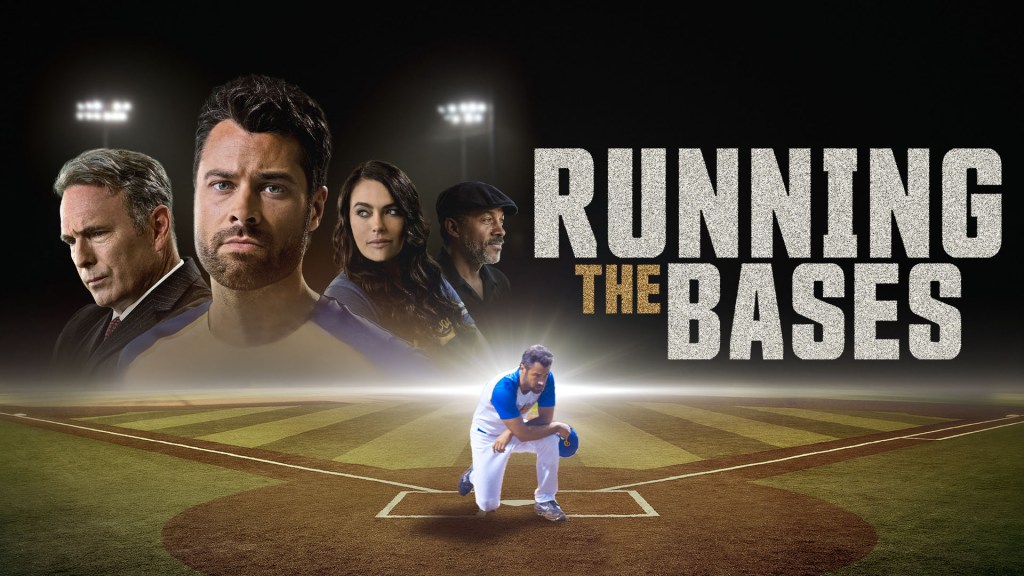
Running the Bases numbers are abysmal. Budget: $3.3 million. Worldwide gross: $1.51 million. Opening weekend: $538,749 from 1,080 theaters. That’s a per screen average of roughly $499. Terrible.
But wait. The audience that saw it loved it. 9.7 on IMDb. 97% on Rotten Tomatoes. Christian audiences tend to be forgiving of production quality, but even so, these are high marks. Not a single mainstream critic saw it or reviewed it though. So little to no possibility of cross-over to the secular market which is what Christian films need to become a bona fide hit.
Then it expanded to 300 more theaters after its opening. Why? No idea. Opening on September 16, 2022 it closed out its theatrical run in mid December. Not on 1400 screens, just a handful. They ran the playbook backwards.
Those towns where it ran for almost three months in theaters were where they should have opened.
Just those. Without A24’s infrastructure, a little more patience would have been required but they could have expanded slowly on word of mouth. I think if they had run AMAD they could have exceeded their budget well into profitability. Perhaps significantly.
The second one is I Can Only Imagine 2. This is a sequel to a huge hit. The premise, the struggles of success, isn’t nearly as compelling as the first one and they split focus off the lead of the first film, introducing a new character played by a name actor. Also the song which was the focus of the second film wasn’t nearly as popular as I Can Only Imagine. With those two strikes against them, Lionsgate and Kingdom Story still counted on the number 2 in the name to do the heavy lifting.
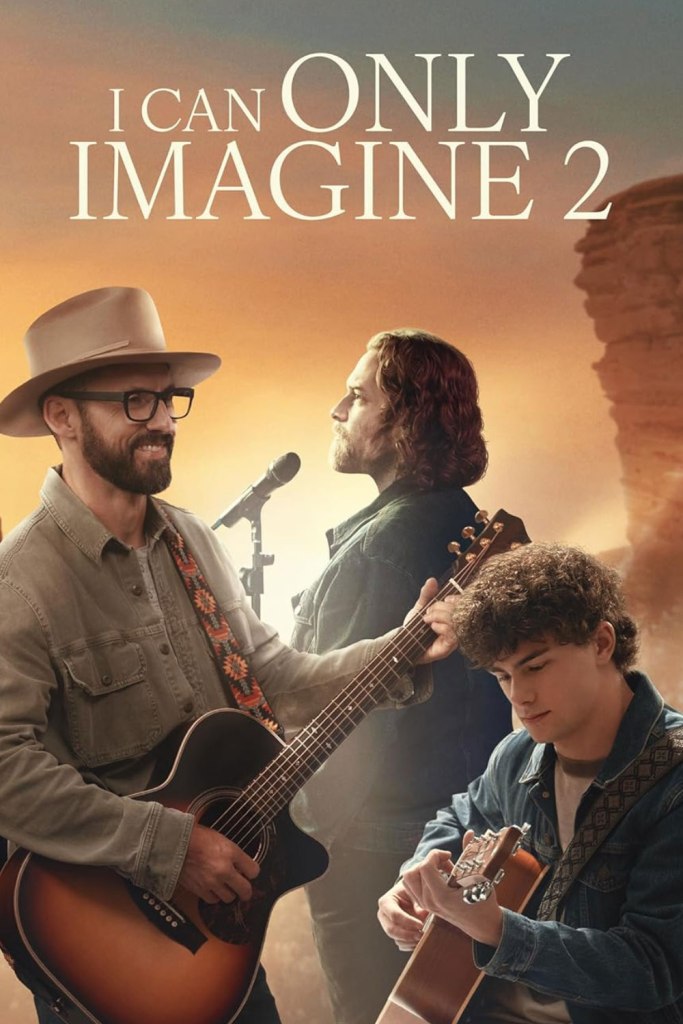
The original: $7 million budget, $85.2 million worldwide. Opened to $17.1 million from 1,629 theaters, a per screen average of $10,502. Solid. And then a pure word of mouth rocket. It didn’t hurt that it was based on a hugely popular Christian song.
The sequel: $18 million budget, more than double the original, requiring roughly $45 million to break even. Opened to $8 million from 3,105 theaters. Per screen average of $2,576. Final gross: $18.58 million against that $18 million budget. Six weeks in theaters.
They didn’t realize that they had to rebuild the audience from almost the ground up. Maybe they thought they owned the audience.
But again, the kicker is it had great word of mouth. 63% Critics score on Rotten Tomatoes and 99% audience score. But both I Can Only Imagine 2 and Running the Bases opened wider than word of mouth could keep up with. A lot wider. So wide they sucked the oxygen from their movies. And the per screen averages made the films look like failures right out of the gate.
A smarter strategy for both would have been a platformed release. Running the Bases should have opened in four cities in the south, where sports and Christianity have deep roots, focused their marketing spend and packed out a few houses. I Can Only Imagine 2 should have gone for only 2 or 300 hundred screens, not just focused in the Bible Belt, but also communities in other cities that had the audience for their film.
Why did they open so wide? Why do so many films open wide and why is that the main strategy these days? It started in ’75 with Jaws when Studios realized they could manufacture a huge opening weekend with a nationwide TV and Print blitz, but I will spare you another history lesson. The main reason smaller companies and indies do it now, is ego. It sounds amazing to say your film opened on over a 1000 screens. Until only five people show up to the theater. The majors do it with mid-level films because they are just impatient and have forgotten how the film business works. A “one size fits all” philosophy. And they don’t care about building a film, they care about monetary extraction either through box office or tax write off and then shunting it off to their streaming service in hopes of reducing churn.
And this gets me to what the Indie Filmmaker can do. Really what any film company can do with anything from low-budget to high mid-range budgeted films. But let’s start with the Indie Filmmaker.
Executing the AMAD Strategy: A Practical Framework
If you have produced a high-quality film (or, y’know, what you think is a quality film) but lack the marketing budget for a wide, multi-city release, do not fall into the trap of a “vanity” opening. Instead, utilize the Adaptive Marketing and Distribution (AMAD) model. By focusing your resources, you can maximize your Return on Investment and turn localized success into a sustainable theatrical run.
1. Strategic Selection: The Power of Psychographics
Avoid the urge to go wide. Instead, hand-pick three cities based on psychographic alignment, the cultural DNA of your story.
Targeting: If you are releasing a faith-based drama, focus on markets like Nashville or Colorado Springs. If you are releasing a challenging character study, look for college towns. If you are dead set on making your existential nihilistic movie on the meaningless of life you want theaters near universities like Brandeis or Reed, or cultural hubs in Portland or San Francisco. It’s best to have New York and L.A. because that is where the industry is and the media news is centered. But you don’t need both if you can’t market in both as well as your psychographically aligned cities. And importantly, both of these cities are incredibly diverse. What plays in Westwood, Pasadena or Santa Clarita will be very different. Pick your target neighborhoods in NY and LA carefully.
The “One-City” Rule: If your resources are severely limited, pick one city. Importantly, never choose your hometown. Your friends and family are not your target audience, they are biased supporters and will come out of obligation and love. You need an honest, objective test market. And if you can only afford one city, don’t try to get it in a bunch of theaters. One theater that is full sends a better signal than 15 that are empty.
Self-Audit: If your film doesn’t immediately suggest a target demographic or geographic stronghold, if it doesn’t immediately scream “Austin will love this” or “Detroit will feel this” or whatever, you face one of two realities: either your film has broad, universal appeal, in which case, you simply have more cities to choose from for your launch options, OR you have produced an ultra-niche project with a very low natural ceiling. AMAD can maximize the former, but it cannot fix the latter.
2. The Campaign: Lead Time and Granular Targeting
Marketing begins at least three months before your opening date. This requires a multi-layered campaign that moves beyond simple trailer drops. You need a creative campaign that builds awareness for and interest in your movie. How to do that is beyond the scope of this article and it is a different kind of skill and art than straight storytelling. But it isn’t impossible to learn and you don’t need to do it perfectly. The adaptive part of AMAD is key all the way down the line.
Social Precision: Modern social media platforms provide granular, affordable tools for geographic and interest-based targeting. You don’t need a ton of followers to get ads up, but you do need a place for followers to find you and connect as a way to gauge interest. Use all of the Socials you can. You can saturate an area around your theater using their basic ad tools and you can see real time response data to make adjustments to your campaign as you go forward.
The 30-Mile Radius: Target your advertising within a 20-to-30-mile radius of your selected theaters. This allows for real-time monitoring of engagement and conversion. If a creative asset or a specific demographic slice isn’t performing, you can pivot your budget instantly.
To sum this up – The Old Way: You needed a TV buy to reach a city. The Adaptive Way: You need $1,000 and an afternoon on a Meta/Google dashboard to own a zip code.
3. The Opening: The “Pulse Check”
When your film opens, you should be there, in one of your release cities. Do not rely solely on sales dashboards. Observe the audience leaving the theater; look at their faces and speak to them. No marketing survey can replace the candid feedback of a viewer who has just experienced your story. And if they don’t like it, you will see it on their faces when they walk out.
4. The Expansion/Contraction Loop
AMAD is designed to mitigate loss through data-driven decisions:
Contraction: If your film underperforms in a city that should be a prime demographic match, that is a critical data point. This means not just per screen average in the first weekend but audience reaction. If most people coming out of the theater don’t like it, the film is likely not ready for wider distribution. Or you can try to rapidly refine your marketing targets.
Refinement: If the audience reaction is positive but the theater is not yet full, do not expand. Refine your campaign and optimize your marketing spend until the per-screen average justifies growth. Be patient.
Expansion: Only when the data shows a clear upward trend in per-screen averages do you reinvest your earnings into expanding to the next set of markets. This doesn’t have to be a huge jump, just an upward trend. Optimally, word of mouth will already be spreading beyond your launch city, making marketing cheaper and earnings from your launch theaters can allow roll-over spend into other markets. Also you will have an idea of what works for marketing.
5. Redefining the Theatrical Window
This paragraph is for the bigger Industry players. The industry’s current obsession with fixed windows (30, 45, or 90 days) is misguided. Even Spielberg has been caught up in this mistake. The market should determine the duration of your run. If your film is filling seats in its fourth weekend, it is performing. Do not pull a winning title simply because a pre-determined window has elapsed. Keep the momentum alive.
AMAD Scales UP
It is easy to look at this process, the local targeting, the theater-by-theater expansion, the focus on social media marketing and write it off as a ‘small-ball’ strategy for the low-budget filmmaker. And it is true: this is an incredibly achievable, high-leverage path for an indie creator to reach a profitable ceiling without needing a seven-figure marketing spend.
But let’s be clear: this strategy is not just for the little guy. It is the missing blueprint for the entire industry.
When a major studio or production company drops a mid-budget drama across 1,000 screens on day one, they are effectively setting their marketing capital on fire. They are gambling on a national opening, hoping to force the market to care. If it doesn’t hit immediately, the per-screen averages look terrible, and a perfectly viable film is branded a ‘flop’ before word-of-mouth ever has a chance to breathe.
Whether you have a $5,000, $50,000 or a $20 million budget, the physics of the market remain the same. The studios have the resources to open on 1,000 screens, but for most films they shouldn’t. By adopting an adaptive, platformed approach, a major studio could mitigate risk, test their creative assets, and build authentic word-of-mouth momentum before they ever commit to a wide expansion. And for a good film that works, word of mouth becomes the marketing. It is a smarter, more disciplined, and ultimately more profitable way to run the business regardless of the size of the production.
With the indie filmmakers, scarcity is just a byproduct of their situation and that can be a good thing. With Studios and Production companies, scarcity becomes a net positive. If people on social media are hearing about this great film that is playing in theaters and isn’t coming immediately to streaming that motivates going to the theater when it shows up in their town. Or they start calling their theater to find out when it is coming or asking them to book it (this happened with Markiplier on Iron Lung prior to release).
Let’s talk about another example. Look at the raunchy comedy, Busboys which did a wide but shallow opening. The filmmakers behind it, David Spade and Theo Von, have some of the most potent microphones in the podcasting world, reaching millions of loyal fans. They bypassed the studio system to make a $3 million comedy, which is an admirable feat. But when it came to distribution, they made a classic tactical error: they opened on 800 screens nationwide. The result? A lackluster $1.6 million opening weekend and a per-screen average that effectively killed any chance of building momentum.
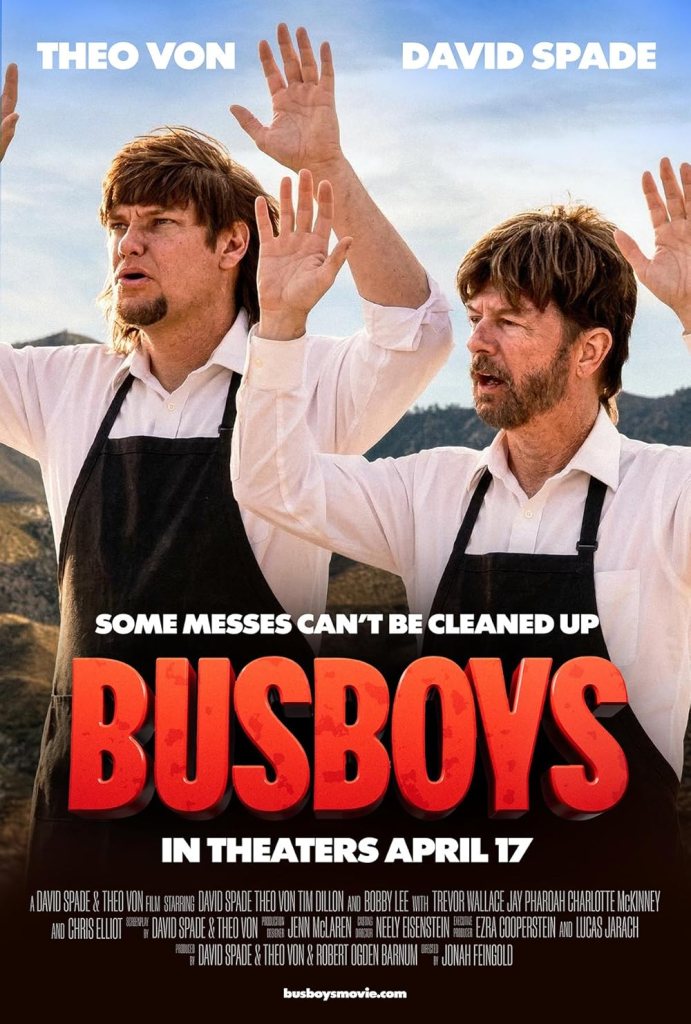
They leaned entirely on their podcast reach to drive a massive, country-wide launch (Remember? Your social media following doesn’t matter), but the market doesn’t work that way. Instead of diluting their footprint across 800 theaters where the film was largely invisible, they should have gone small. If they had platformed that film in 50 to 100 strategic college towns and cultural hubs, places where their specific demographic was already congregating, they could have sold tickets, gained momentum, built authentic word-of-mouth and generated the per-screen averages that actually move the needle. They have an audience, but they didn’t have the strategy to convert that audience into a theatrical event. Because people that subscribe to your podcast, read your newsletter, follow you on social media, still need to be convinced to spend money on your movie. If Spade and Von had toured briefly, doing Q&A’s after screenings in these places, they would have sold out theaters on those nights and increased visibility with potentially viral clips on social media.
Part of what AMAD does is mitigate the binary bet. A film doesn’t have to be a hit or a bomb as current Hollywood conventional wisdom would have it. It can be profitable, it can provide ROI for investors and it can open doors for the filmmaker without being either. Profitable is enough. Profitable gets you the chance to make another movie. This definition of success in the industry has been lost but this is where careers can be made and new Studios built. AMAD can find the ceiling for all types of films and it can keep massive marketing waste from wrecking a film that could be profitable or reach profitability without it.
And, this is very important, even a middling theatrical run boosts the value of the film for ancillary markets. This is an incontrovertible truth. A theatrical run advertises a film and builds awareness, interest in it, before it hits streaming.
But every theatrical run comes to an end. Once your theatrical run has reached its natural ceiling using AMAD, you have successfully built a brand and a validated asset. You may already be profitable or close to it. Only then do you transition into the ancillary markets of physical media and streaming.
Streaming is an Ancillary Market (Or a Content Dumping Ground)
The fundamental flaw of the streaming model is that it treats film like water from a tap, a utility people pay a flat monthly fee to access, rather than a premium piece of intellectual property. The biggest streamer, Netflix, has all the brand identity of the power and gas companies. The big streamers want “content”. You and I want to tell stories and make movies that connect with people.
The Valuation Problem: When a film goes straight to a streamer or lands there too quickly, it loses its distinct economic identity. It becomes a data point used to prevent subscriber churn for a massive tech corporation or struggling Studio, rather than a discrete asset generating direct revenue per view or per purchase.
The Churn Trap: Streamers don’t pay filmmakers based on how much an audience loves a movie; they pay a flat licensing fee or an opaque backend structure. Once that initial window closes, the film is buried under the algorithm. Streaming is a great tertiary window for catch-all awareness, but relying on it for primary ROI is financial suicide.
So let’s talk about DVDs. They’re dead, right? No they are not.
Why DVD/Physical Media Remains a Vital ROI Engine
While the mainstream media loves to declare physical media “dead,” the data tells a completely different story, especially for independent, niche, and genre filmmaking. And frankly for all media.
The High-Margin Collector & Niche Market: Physical media has evolved from a mass-market commodity into a high-margin, premium collector’s market. For specific psychographic audiences, whether that’s horror cinephiles buying boutique Criterion/Arrow releases or faith-based audiences who want to own a permanent physical copy for their family library, DVD and Blu-ray represent direct, high-margin transactions.
Ownership vs. Censorship/Vanishing Content: Audiences are waking up to the reality that streaming means you own nothing. When platforms quietly delete movies a digital film you “purchased” will just vanish. A physical disc becomes a premium asset. People will pay to actually own the things they love.
The Tail That Wags the Dog: For a mid-to-low-budget film, selling 10,000 to 20,000 physical units directly to a dedicated fanbase via your website or targeted retail can completely clear the remaining hurdle to profitability. On a streamer, those same 20,000 views yield practically pennies.
I still buy DVDs a lot. Sometimes it is for a series I was watching on a streamer and it just vanished, gone, can’t find it anywhere. And I was only half way done. Other times it’s because I just want to own it because I will rewatch it, like Band of Brothers and The Pacific. One thing I have noticed on Amazon is that when I see a show I am shopping for, like 12 Monkeys, which was gone off streaming for a while, it will say under the title (on the mobile app), “200+ bought in the last month.” I just looked up The Office box set. 700+ bought in the last month. Let’s think about the math on that.
The Math on Manufacturing and Margin
Let’s start with what it actually costs to make a DVD. Standard replication, not duplication, replication, which is what you want for retail quality, runs roughly $1.50 to $2.50 per unit at a minimum order of 1,000 units. Add a printed insert, a standard keepcase, and shrinkwrap and you’re looking at $2.00 to $3.00 per unit all-in at modest quantities. At 5,000 units that number drops further. At 10,000 you’re approaching $1.50 per unit depending on your packaging choices.
Now price your DVD at $14.99 direct to consumer through your own website. Your margin on that transaction, after payment processing, is somewhere up to $12.00 per unit. Sell it through Amazon as a third party and you give up some of that, but you’re still clearing $8.00 to $10.00 per unit on a product that cost you $2.00 to make.
Compare that to your streaming royalty. On most platforms an independent film earns somewhere between $0.004 and $0.008 per stream (conventional wisdom, it could be less, probably not much more). To earn $12.00, the margin on one DVD sale, you need approximately 2,000 streams. Every single DVD you sell is worth 2,000 streams in real dollar terms. As for storage, 5 to 10,000 DVDs is a corner of your garage. I mean, make sure there is demand for it and market it, maybe do your initial order on pre-sales. But this is a low-cost way to still increase your profit or become profitable. Even today.
What Studios Are Leaving Behind
At 100,000 units the manufacturing math transforms completely. Replication at that volume drops to somewhere in the range of $0.80 to $1.20 per unit all-in including packaging. A studio releasing a mid-budget film at that scale is producing a product that costs less than a dollar to manufacture and retailing it at $14.99 to $24.99 depending on format and whether it’s a standard release or a collector’s edition with bonus content.
And here is the part that should embarrass the bean counters who decided physical media wasn’t worth the trouble. Studios at that volume don’t store inventory. They use fulfillment partners who warehouse, pack, and ship on demand. The studio’s marginal cost of storage per unit is effectively zero. They are not tripping over boxes in a garage. They have an infrastructure that already exists, is already paid for across their entire catalog and turns a sub-dollar manufactured product into a $12 to $18 margin transaction at retail.
The decision to abandon or dramatically reduce physical media releases at the studio level was made by people looking at declining mass market volume at Walmart and Target and concluding the format was dying.
What they missed is that the mass market commodity version of physical media was dying. The premium collector market never went away. Boutique labels are thriving precisely because the audience that remains is the audience willing to pay for ownership. That audience will grow again, the same way it is growing again for Vinyl and CD music.
A studio that writes off physical media because Walmart reduced its DVD floor space is leaving real margin on the table from an audience that is actively looking for ways to spend money on things they love. They handed that margin to the boutique labels. Those labels keep acquiring catalog titles, printing DVDs (and money). The studios would rather license cheaply to these labels than release themselves. That’s just…it’s just stupid.
Or they won’t release physical media at all. A perfect example of this is that Apple won’t release a DVD set of Masters of the Air. I want such a collection to sit next to Band of Brothers and The Pacific. But I am not going to keep their mediocre streaming service just to watch it. It has, what? Three decent shows?And those take years long breaks between seasons? They aren’t keeping me as subscriber by not putting Masters of the Air out as a DVD set, they are just losing me a customer. But Apple doesn’t care. Whatever they are doing with Apple+ it has very little to do with a love of storytelling.
For the indie filmmaker the lesson cuts both ways. The studio’s abandonment of the format is your opportunity. You are not competing with a major studio physical release for shelf space at Target. You are competing for a corner of a collector’s shelf and that is a competition you can win on quality, specificity, and direct relationship with your audience which you have because they liked your film.
That 700+ units of The Office bought last month on Amazon is not nostalgia. It is a market signal. Then go down the list on Amazon. DVD’s, Blu-Ray, 4K, whatever are still selling and they are selling well.
But you gotta go to streaming eventually.
The PVOD and DVD release, in my opinion, should be timed and marketed together. Your PVOD launch is a marketing event. It generates attention, social activity, and a renewed conversation about your film among people who missed the theatrical window. That attention has a short half-life. The audience it reaches in the first two weeks is the same audience most likely to want to own a physical copy. If your DVD isn’t available at the moment of peak interest you are asking that person to remember to come back, and they won’t.
So launch them simultaneously. Let the PVOD customer who watches it Tuesday night buy the DVD by Wednesday morning while the film is still in their head. That is the window. It is measured in hours, not months. Or they may prefer to purchase the DVD which they then own and can watch anytime, for the same price as the PVOD rental. And you get to keep all of that.
I don’t have much else to say about streaming. Making your licensing deal with a streamer, if you are lucky enough to do so, should be your last stop at the peak of your negotiating power. Whatever money you get out of them will probably be the last money you ever see from them. Streaming is a great safety net for catch-all awareness after the film has run its course, but it should always be treated as the far end of the ancillary tail. True profitability is built on a simple, timeless sequence: Pack the house to build the brand, then sell the object to secure the asset.
While this can and should be done by the filmmaker, distribution company or production company, there is a real opportunity to build a film distribution company from the ground up based on Adaptive Marketing And Distribution.
The AI Disruptor: Retooling the Marketing Engine
This is where the real disruption lies. The current studio system uses data backwards; they use algorithms to tell them what stories to greenlight, resulting in soul-less, formulaic cinema. A truly disruptive AI-driven film distribution company would reverse this entirely. They would leave the storytelling to human craftsmen and use AI exclusively to revolutionize marketing and distribution mechanics.
Imagine a distribution engine powered by predictive analytics and real-time automation. Instead of relying on an army of human media buyers to manually guess where to place ads, an AI-driven distributor can monitor hyper-local social media sentiment, ticket pre-sales, and digital engagement signals in nano seconds.
If a platformed release in Nashville begins showing massive virality signals on a Friday night, the AI doesn’t wait for a Monday morning studio meeting. It dynamically reallocates the digital ad spend on the fly, instantly expanding the ad radius to neighboring towns, optimizing bids and prepping the next theaters and markets for expansion based on psychographic data.
Conversely, if the signals say a film has hit its ceiling in Portland, the system automatically caps the spend, mitigating loss instantly. This isn’t using AI to replace the artist; it’s using AI as a precision guided missile to find the exact audience the artist made the film for. It takes the human ego, the bloated agency fees and the guesswork almost completely out of the distribution equation.
AI companies exist right now to optimize the distribution of stuff. AI marketing companies exist right now that have access to mind-blowing amounts of data on everyone (yes, disturbing, but we might as well use it to our advantage since it exists) but they aren’t cheap. None of the Film distribution companies are using AI and data this way (or mostly not). For the smart person with money and vision, this is the way to build a new empire.
The Theater Chain Awakening: The Vertical Integration Renaissance
I would be amiss if I didn’t address the theaters themselves. They are a problem. Ticket prices are out of control and have surpassed inflation significantly. While they moan about theatrical windows and streaming, they spend their money on making going to the movies a premium experience (like they are Dubai but they can’t depend on enslaved Filipinos and Indians to prop them up). What they have done is priced teenagers and families out of the theater experience. This has to change.
And this brings us to the biggest missed opportunity in the modern entertainment landscape. For seven decades, theater chains were legally barred from owning the content on their screens due to the 1948 Paramount Decrees. But in 2020, those restrictions were officially lifted. It is now completely legal for theater chains to make their own movies again.
So why aren’t they? Fear. Institutional inertia. Lack of vision.
While major exhibition chains like AMC or Regal complain constantly about a lack of product from the studios and short theatrical windows, they are sitting on a goldmine. They don’t just own the screens, they own boatloads of proprietary first-party data. Every time someone swipes a loyalty card, buys a ticket online, or purchases popcorn, that theater chain captures exactly who that person is, where they live, how often they watch movies and exactly what genres they show up for. They have a direct, friction-free digital relationship with millions of moviegoers.
A smart theater chain utilizing the AMAD playbook could revolutionize the industry overnight by funding their own mid-and-low-budget films. They don’t need to guess where the audience is, their data already tells them which specific zip codes and theater locations have a high concentration of faith-based viewers, horror fans, or character-drama enthusiasts.
Instead of booking a studio blockbuster onto 4,000 screens and watching it bomb, a theater chain could greenlight a $5 million human-driven story, platform it across their own key regional locations where they know the target psychographic lives, use their loyalty apps to micro-target those exact customers and let word-of-mouth pack the houses. They keep 100% of the box office revenue because they own the theater, they maximize their concession sales and they build a distinct brand identity. Then they license it and more money pours in. It is the ultimate return to Old Hollywood vertical integration, modernized with 21st-century data.
Conclusion
It may sound like I’m saying this is all easy. That is the nature of an article like this, “Five Ways to Market and Distribute Your Movie” and whatnot. That is not what I’m saying. Every single step of this will be difficult. There will be constant unforeseen challenges that are different for every project. And despite the best efforts, some films will still fail. But this system is achievable by a small, dedicated team with limited resources. Making a film is hard. If you can do that, you can do this. And at this point, what are your options really? If you are a Studio, Production or Distribution company, this becomes infinitely easier. There is no excuse to let good films fail.
This is knocking on the door. You have something you are excited about that you want to share. Some doors will be slammed in your face, but some people will invite you in because what you have to say, the story you have to tell is exactly what they have been waiting for.
Now it is time for me to get back to making my YouTube show, Patterns of Supernatural Phenomena on the Thorncrown Studios YouTube Channel. I’m gonna keep telling stories. I will be back with further unsolicited thoughts on the Industry when the production schedule permits. Do with this what you will.
 Thorncrown Studios