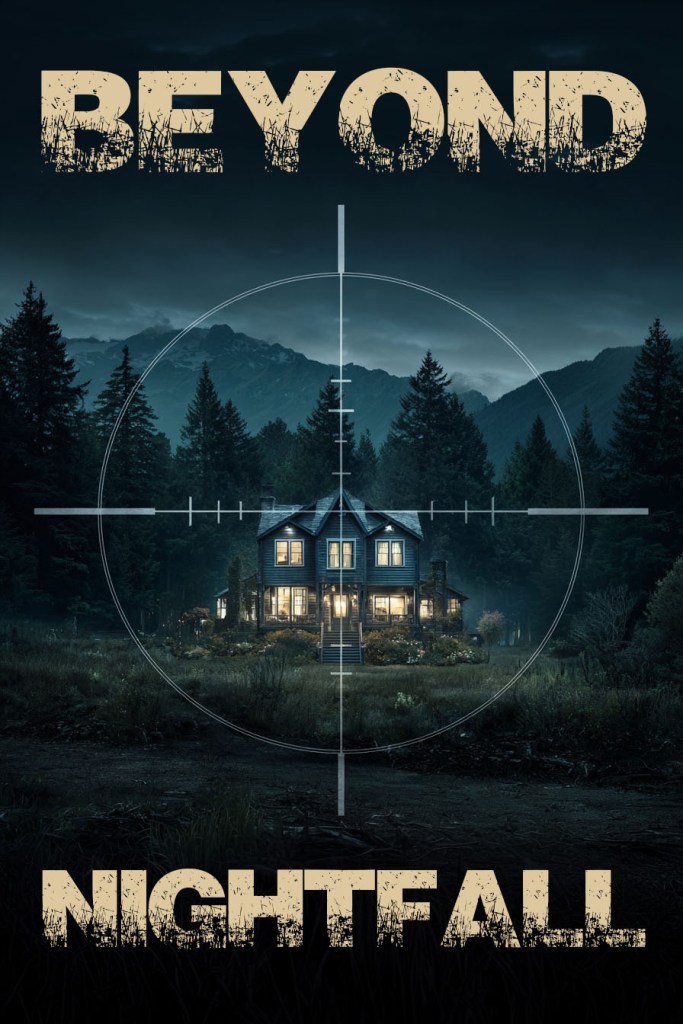
A Post‑Apocalyptic Thriller by Coleman Luck III
When the world ended, it didn’t happen with a single blast or a single battle. It happened in layers, slow, strange, and merciless. Beyond Nightfall opens in the final hours before everything collapses, then plunges into a transformed America where the familiar has been burned away and the survivors are left to navigate a landscape haunted by loss, violence, and something far more mysterious.
At the center of the story is the Granger family, ordinary people forced into extraordinary choices. A young soldier fighting to protect refugees. An aging father determined to resist a rising military regime. A widow holding her family together in the wilderness. And Willie, the gentle, childlike Down-Syndrome brother whose innocence becomes a kind of compass in a world that has forgotten what innocence looks like.
The script moves with the tension of a war thriller and the emotional weight of a family drama. What begins as a desperate escape through the ruins of Los Angeles expands into a larger confrontation with a new authoritarian power, one that claims to be rebuilding civilization but hides its true nature behind symbols, secrecy, and a chillingly calm rhetoric. As the Grangers and their allies struggle to survive, the story keeps tightening, revealing deeper layers of deception, loyalty, and sacrifice.
Beyond Nightfall is not just about the end of America, it’s about what remains afterward: the bonds of family, the cost of courage, and the quiet, stubborn hope that refuses to die even when everything else has. The script blends grounded military realism with eerie, almost mythic undertones, creating a world that feels both recognizable and unsettlingly altered. Every character is pushed to their breaking point, and every choice carries consequences that ripple outward.
Tonally, the piece sits at the crossroads of post‑apocalyptic survival thriller, psychological mystery, and intimate character drama. It’s a story where firefights and moral dilemmas carry equal weight, and where the smallest human moments, a shared meal, a whispered promise, a letter carried across miles, become lifelines in the dark.
Structurally, Beyond Nightfall draws inspiration from two classics:
- Hitchcock’s Psycho — in the way it shifts and reframes the narrative, and uses perspective as a weapon.
- Bogart’s Key Largo — in its claustrophobic tension, moral confrontation, and the way ordinary people are forced to stand against a corrupt, charismatic power.
If you’re drawn to stories like Children of Men, The Road, A Quiet Place, Lone Survivor, Sicario, or The Book of Eli, you’ll find the same blend of intensity, humanity, and slow‑burn dread here.
Beyond Nightfall is a journey through devastation toward something unexpected, something that asks what survives when the world doesn’t.
And now the journey is yours to take.
In the mid‑2000s, Beyond Nightfall came remarkably close to production. At the time, the script was budgeted in the $3–5 million range, a number driven largely by practical effects, location work, and the scale of its opening sequences. Several companies expressed strong interest and the project advanced to the brink of a deal but ultimately the financing couldn’t be aligned with the required scope. Ironically, the very elements that made the script exciting also made it difficult to mount at that moment in the industry. Today, with digital production tools, virtual environments, and far more efficient post‑production pipelines, the estimated budget would likely fall in a similar range or perhaps even lower. The story is fundamentally character‑driven, with only a handful of set‑pieces requiring significant effects work, making it unusually feasible for a modern independent or mid‑tier studio to produce without compromising scale or ambition.
 Thorncrown Studios