
WEBS is a mind-bending, genre-defying sci-fi horror thriller that begins in the gritty underground tunnels of Chicago and descends—literally and metaphorically—into a nightmare of greed, corruption, and monstrous revelation. What starts as a quirky blue-collar caper about three down-on-their-luck salvage workers searching for junk beneath the city transforms into a cosmic trap, where time, space, and reality fracture.
When Barry Drum and his friends stumble upon a sealed door beneath the city and break it open, they uncover a forgotten chamber from the Manhattan Project—and something far stranger. A glowing chemical leak leads to a mirror-world Chicago: desolate, decaying, and overrun by spectral webs. It’s a place with no people, endless riches—and something ancient and hungry watching from the shadows. What follows is part Ghostbusters, part The Mist, with a tone that balances irreverent streetwise humor and gut-twisting dread.
At its core, WEBS is a dark fairy tale wrapped in urban grit. The characters are lovable losers with real human flaws: Barry, the romantic screw-up; Eddie, the delusional schemer with a heart full of comic-book theology; and A.J., the neurotic tagalong. Their brotherly dysfunction gives the story a grounded charm even as it spirals into horror. Meanwhile, Tracy—Barry’s girlfriend—adds emotional weight, grounding the story in a fragile but sincere romance that’s tested as reality unravels.
Luck’s writing is cinematic, fast-paced, and laced with satirical commentary on consumerism, greed, and the spiritual decay of the modern world. The dialogue crackles with character, and the visuals—industrial decay, eldritch webs, grotesque mutations—scream for the screen. The mysterious spider-woman, part temptress and part Lovecraftian horror, is a standout antagonist whose tragic undertones add depth to the terror.
With its fusion of horror, science fiction, and social satire, WEBS is ripe for adaptation as a feature film or a stylized limited series. It’s a world where the American dream curdles into a nightmare, and the deeper the characters dig—for money, power, or love—the more entangled they become in something far older and more terrible than they imagined. Audiences will be drawn in by the mystery, gripped by the suspense, and haunted by the web that’s waiting to close.
This screenplay was purchased by the Sci-Fi Channel and produced:
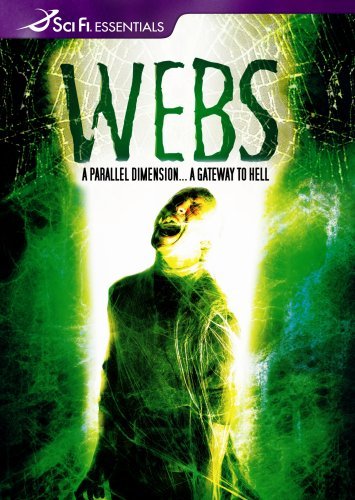
The original WEBS sceenplay remains a gripping, genre-blending sci-fi horror with darkly satirical bite—but when it was adapted for television in 2003 by the Sci-Fi Channel (now Syfy), the result was a dramatic downgrade.
The Richard Grieco–led TV movie, directed by David Wu, was widely criticized for its poor production quality, thin characters, and low-budget effects. Reviews were scathing. Rotten Tomatoes called it “poorly thought out and poorly executed…still, it isn’t completely unpleasant.” (https://www.rottentomatoes.com/m/webs), while DVD Talk wrote: “Not quite bad enough to be terrible, but not nearly good enough to be good.” (https://www.dvdtalk.com/reviews/34522/webs/). IMDb user reviews piled on: “Are the actors second rate? You bet…” (https://www.imdb.com/title/tt0346136/reviews). Many viewers found it unintentionally humorous, dismissing it as “terrible Sy Fi channel original”
On-set issues reportedly led to script rewrites from multiple writers—and so serious was their dissatisfaction that at least one writer and the director allegedly petitioned to have their names removed. Though not officially documented as an “Alan Smithee” case, the creative turmoil and apparent disowning of the final cut point to a deeply troubled production.
The end product stripped out much of the script’s layered social satire, trimmed character depth, and leaned heavily on B‑movie visuals—spider-zombie clichés, cheap CGI, and rushed pacing. The haunting tension, thematic complexity, and charismatic core characters, so effective in your original script, were lost.
After the initial sale, Coleman was not involved in the production in any way and when given a cut of the film to screen, he also removed his name from the credits.
 Thorncrown Studios